


There’s a corner of my living room that has no business holding plants.
It’s the only spot that gets decent light in the winter — a small table pushed up close to the window, catching whatever weak afternoon sun manages to find its way through. It’s not ideal. But it’s what I’ve got, so that’s where some of the plants live.
The problem is that same table sits right next to my wood stove.
So on cold days, I get the fire in the stove going and the air gets hot and dry fast. The humidifier runs in the background doing its best, but it’s fighting a losing battle against radiant heat.
The soil dries out quickly in my plants. The leaves sometimes curl at the edges.
And me?
I forget to water them sometimes.
More than I’d like to admit.
That combination, the heat, the dry air, the inconsistent watering, was already pushing my plants to their limit.
Then I went on vacation.
🏡 What I Came Home To
When I returned, the stove hadn’t been running, but the furnace had been on. I’d purposely kept the temperature lower than usual, around 50 degrees, just enough to keep the pipes happy.
What I didn’t fully account for was what that sudden shift would do to a group of plants already living on the edge of too much heat and too little water.
Cold slows everything down.
My plants, already sitting in soil I’d watered before I left, suddenly didn’t need that water anymore. They stopped drinking. The roots just sat there, wet and struggling in the cold soil.
Some plants drooped. Others had already started dropping leaves.
A few hadn’t made it at all.
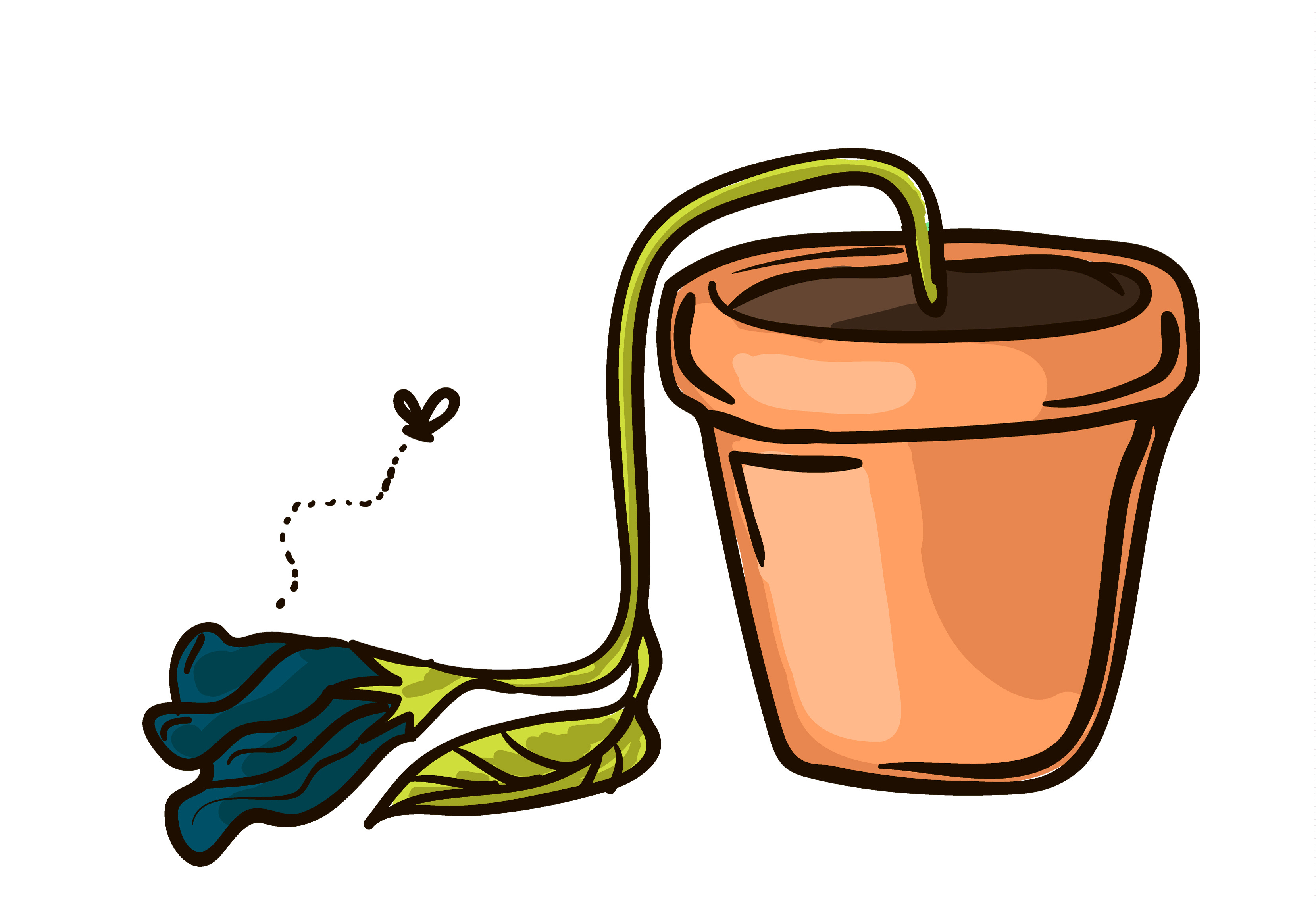
At first, I blamed the vacation, but the more I sat with it, the clearer it became: the trip wasn’t the problem.
It was just the final swing in a much longer pattern — too hot, then too cold, too dry, then too damp, forgotten and then over-watered.
My plants weren’t just dealing with one bad week. They were navigating a cycle of unpredictable extremes that never gave them a moment to settle, and eventually, that caught up with all of us.
It’s the Swings That Break Things
Here’s something I’ve come to appreciate about plants: they’re tougher than we think.
Most of them can handle imperfect conditions, a missed watering here, a drafty window there, without completely falling apart.
What they struggle with is the relentless back and forth, the dramatic shifts, the feast and famine cycle that never lets them find their footing and just… grow.
When the environment keeps lurching between extremes, the plant can never quite adapt. It’s always reacting, always recovering, spending every bit of energy just trying to stay upright instead of putting down deeper roots or pushing out new growth.
Now, to be fair, some plants are genuinely built for extremes, and it would be wrong not to mention it.
A cactus doesn’t just survive in the desert, it thrives there. But here’s the thing — it thrives because every single part of it evolved specifically for that environment.
The thick waxy skin, the water-storing flesh, and the shallow roots are designed to catch rare rain fast.
It’s adapted. It’s prepared. It signed up for the desert, in a manner of speaking.
My rosemary, lemon verbena, and lavender sitting next to a wood stove in Vermont did not. Context matters, and the extreme only works when everything about you is actually designed for it.
And standing there looking at those plants, it hit me.
I put myself through the same thing.
Constant swings. Too much. Not enough.
No wonder it’s been hard to grow…
Sound Familiar?
We’re really not that different from the plants on that table. And I mean that in the most affectionate, slightly humbling way possible.
We go hard on a new habit for two weeks and then drop it entirely. We restrict ourselves, then overindulge. We grind until we’re running on fumes, crash completely, and then wonder why nothing seems to stick.
We set enormous goals with enormous energy and burn out somewhere in the middle, long before we ever get close to the finish line.
It’s not weakness. It’s not laziness. It’s what happens when we skip the middle ground and only know how to live at the edges.
Extremes feel productive, don’t they? A dramatic overhaul feels like progress.
A big sweeping change feels like finally getting serious. But underneath the surface, the roots aren’t deepening. They’re just trying to survive the next swing.
We usually don’t fail because we stop caring. We fail because we exhaust ourselves swinging too hard in every direction, leaving nothing left for the long, quiet work that actually moves the needle.
The Middle Ground Is Where Things Actually Grow
Consistency is quieter than most people expect. It’s undramatic. It doesn’t make a good story in the moment, and it’s rarely the kind of thing you post about on a Thursday afternoon. Unless you happen to be writing a newsletter about it, apparently.
Most people don’t share the highlight reel of showing up to practice something small every single day. There’s rarely a dramatic before and after from one day to the next.
Just slow, steady accumulation that you can only really see when you look back weeks later and realize something is still alive that might not have been otherwise.
That’s it.
That’s the whole secret, as unsexy as it sounds.
I’ve been thinking about this a lot since losing those plants. Not with guilt exactly, but with genuine curiosity. What would it have looked like if I had just been a little more consistent?
Not perfect and not obsessive. Just steady.
A regular watering day. A small adjustment for the season. Paying attention to the environment instead of reacting after the damage has already been done.
The changes are small and sustainable. Completely unglamorous, really.
What I’m Doing Differently Now
I’m not going to pretend I’ve figured it all out, because I haven’t. And honestly, pretending otherwise would feel pretty hypocritical given the pile of dropped leaves I came home to. But I have made some changes.
I rethought that corner of the living room and moved a couple of the more sensitive plants away from the direct heat of the stove. Since that also meant less natural light, I’ve been testing a small grow light to make sure they get enough.
These days I check the plants every two or three days. Not to water on autopilot, but just to look at the soil, notice what’s going on, and respond to what’s actually there.
Nothing dramatic. No overhaul. Just a little more steadiness built into the routine.
And I’m trying to do the same thing in other parts of my life.
Not with a rigid system or a color-coded schedule, but with the same basic question I’m now asking my plants: what does consistent, sustainable care actually look like here?
Sometimes the answer is smaller than I expected.
And that turns out to be a good thing.
🧠 A Simple Framework — For Plants and for You
For the plants
• Pick one consistent watering cue. A specific day or a quick soil check you can actually remember.
• Learn the quirks of your space and plan around them instead of fighting them.
• When the season changes, adjust if necessary. Don’t keep doing what worked in July when it’s January.
For you
• Start smaller than feels worthwhile. The goal isn’t to be impressive right away. The goal is to still be going three months from now.
• Protect the routine more than the result. A five-minute version of the habit still counts. It keeps the thread alive.
• When life shifts, and it will, adjust the dose instead of abandoning the practice. Scale down before you disappear entirely.
Consistency isn’t about doing the most. It’s about not stopping.
Closing Thoughts
I lost a few plants this winter. Some to bad luck, some to my inconsistency catching up with me, and most to an environment that kept swinging too far in every direction without ever finding a middle ground.
It’s a small thing in the grand scheme of things, but it stuck with me more than I expected.
Because I think a lot of us are living like that wood stove corner.
Caught between extremes. Never quite settling. Always reacting instead of tending.
And the cost of that, whether we’re talking about rosemary or routines, is that things that could have made it simply… don’t.
Consistency rarely feels like much in the moment. But over time, it’s what most of the breakthroughs are built on.
Sometimes it’s simply what keeps something alive long enough to grow.
🎯 Dream Check In
Each newsletter, I share an update on a personal goal I’m working toward. TriGardening isn’t just about plants. It’s about using gardening, nature, and small daily practices to move our lives in a more intentional direction. The Dream Check-In is my way of exploring that idea in real time.
This newsletter’s update
The callouses I mentioned last week are definitely forming from learning the guitar, but they still hurt just as much as when I started. I’m very ready for them to show up.
At the same time, I realized my pinky finger is still a little irritated from when I jammed it a few weeks ago. It’s the same finger I mentioned last week, the one I broke as a teenager. It usually heals just fine, but I didn’t realize it was still bothering me until I started playing guitar and certain movements kept aggravating it.
Because of that, I’ve been leaning into chords that don’t rely as much on the pinky. I also started working on ear training to sharpen my listening and accuracy while the finger settles down.
Mostly I’m just trying to keep showing up and work with where things are right now instead of forcing it.
If you’ve got something you’re trying to stay consistent with, big or small, glamorous or completely unglamorous, I’d genuinely love to hear about it. Just reply and tell me.
Until next time, stay curious and keep growing.
-KC 🌱