

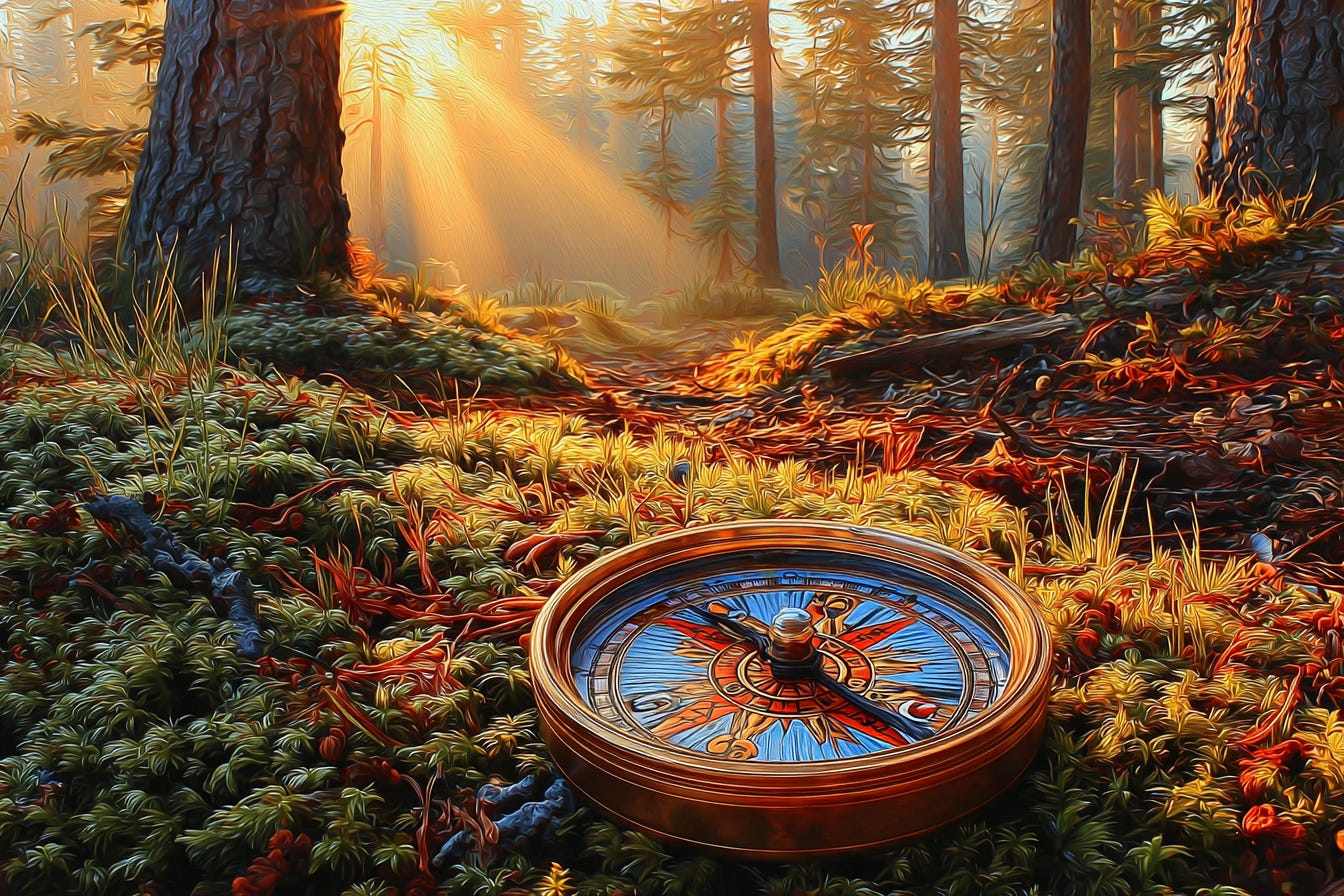
In Part 1, I talked about what to do when life forces you to stop moving forward on the path you were on. How to pause without feeling like you’ve failed. How to pivot without abandoning yourself.
But there’s a second phase that no one really prepares you for.
Eventually, the dust settles. The shock wears off. The urgency fades.
And you’re left standing in a strange, quiet space where the old direction is gone… but the new one hasn’t revealed itself yet.
You’re not in crisis anymore.
But you’re not moving forward either.
You’re just… waiting.
This stage can feel even more uncomfortable than the chaos that came before it. At least chaos gives you something to react to. Uncertainty just sits there, asking questions you don’t have answers for.
What do you do when you’re ready to move again but don’t know which way to go?
Standing still for too long can feel unbearable, so the pressure builds to choose something… anything… just to prove you’re not stuck.
Why “Just Pick Something” Doesn’t Always Work
Well-meaning people will often tell you to just choose a direction and start walking.
“Anything is better than nothing.”
“You’ll figure it out as you go.”
“Stop overthinking it.”
Sometimes that advice is helpful. But sometimes it isn’t.
If you’ve just come through a major life shift, forcing yourself into a random new goal can feel less like progress and more like trying to outrun discomfort. You might move, but you won’t necessarily feel aligned. In fact, you may end up more drained than before.
Not all motion is meaningful motion.
There’s a difference between moving forward and moving away.
Standing still is uncomfortable, but moving without conviction can feel even worse.
When moving blindly feels wrong, the alternative is often to wait for a sign so clear it can’t be questioned.
⚡ The Myth of the Lightning Bolt
We’re taught to expect clarity to arrive like a dramatic revelation. A single moment where everything clicks into place and you suddenly know exactly what to do.
Real life rarely works that way.
Direction rarely announces itself with fireworks. It shows up quietly, repeatedly, often disguised as a small curiosity or a persistent thought you keep circling back to.
Not a thunderclap. More like a tap on the shoulder.
You might notice it… then doubt it… then get distracted… then notice it again months later.
The Tug
If you pay attention, many people can identify something like this in their lives. A subtle tug toward a certain idea, activity, or path that doesn’t fully go away, even when you ignore it. I know I have and maybe you have to at some point in your life.
Sometimes it feels strong and undeniable. Other times it disappears completely, buried under stress, fear, or practical concerns.
Then it returns.
It can be frustrating, especially when feeling that pull isn’t accompanied by a clear plan. You know something is there, but you don’t know what to do with it.
And when chaos enters the picture, whether external or internal, it can scramble your signal entirely. You might question whether that feeling was ever real in the first place.
But confusion doesn’t mean guidance is absent. Sometimes it just means there’s a lot of noise.
Fear, exhaustion, grief, outside opinions, financial pressure, self-doubt… all of it can interfere with your ability to hear what you already sensed when things were quiet.
But even when the signal comes through, feeling the tug is one thing. Trusting it enough to act on it is something else entirely.
Signs Don’t Choose for You
If you start paying attention to that subtle pull toward a certain idea, path, or possibility, it’s natural to wonder whether it means you’re supposed to follow it.
But guidance doesn’t work that way.
It rarely arrives as a command or a guarantee. More often, it shows up as patterns you begin to notice, opportunities that keep appearing, conversations that point in a similar direction, or ideas that energize you instead of draining you.
Sometimes it’s an interest that refuses to fade, no matter how many times you try to set it aside.
But none of these things force your hand.
Guidance doesn’t choose for you. It narrows the field. It highlights possibilities. It nudges your attention toward certain paths while leaving the final step entirely up to you.
You still have to walk through the door.

Why We Resist What Calls to Us
And if guidance doesn’t force you to move, an obvious question follows.
Why don’t we follow it when we feel it?
Because the path it points to often asks something from us.
It might require learning new skills, risking failure, changing how others see us, or letting go of an identity we’ve outgrown. Sometimes it asks for patience when we want certainty, or courage when we feel depleted.
And sometimes the resistance isn’t dramatic at all. It’s subtle, practical, even responsible on the surface. It sounds like: not now… I don’t have time… I can’t afford that… I wouldn’t be good enough anyway.
These thoughts don’t feel like fear. They feel like maturity. Like you’re being realistic, cautious, or sensible. They offer relief, because they give you a reason to stay where you are without having to admit that something deeper might be holding you back.
Resistance can look a lot like logic.
🧭 How Direction Actually Emerges
Clarity often comes after movement, not before, but not just any movement. There’s a difference between running from uncertainty and exploring what quietly draws your attention.
When resistance is strong, it can feel like the only options are to either force a big decision or stay frozen in place. But there’s another approach.
Instead of forcing a direction or waiting for perfect certainty, it can be more helpful to run small, low-risk experiments based on what already feels interesting or meaningful.
Try something in a limited way. Give it time. Notice how you feel during and after.
Does it spark curiosity?
Does it create energy instead of draining it?
Do you find yourself thinking about it even when you’re not doing it?
You don’t have to commit to forever. You just have to be willing to explore what’s in front of you. This is why I chose guitar as my pivot project. Not because it solves everything or defines my future, but because it’s something I can engage with right now.
It gives me a direction to test without requiring a lifetime contract.
Sometimes the next path doesn’t appear all at once. It reveals itself one small experiment at a time.
Difficult Doesn’t Mean Wrong
Of course, trying something new doesn’t mean the uncertainty disappears.
You might question yourself the next day. Or the next week. Obstacles will appear. Motivation will fluctuate. Progress will feel uneven in ways that make you wonder if you misread the signal entirely.
It’s easy to interpret that discomfort as proof you chose wrong.
But difficulty isn’t always a stop sign. Often, it’s just the friction that comes with learning how to walk a road you’ve never taken before.
Staying steady doesn’t mean feeling confident all the time. It means continuing, even when doubt gets loud again.
Becoming Someone Who Trusts Their Own Steps
Doubt will come and go. Difficulty will rise and fall. That part is inevitable.
What changes over time isn’t the presence of uncertainty. It’s your relationship to it.
The more you act on the small things that feel aligned, the more evidence you gather that you can navigate without perfect clarity. You begin to see that you can make decisions, adjust when needed, and survive the discomfort of not knowing.
Self-trust isn’t built through certainty. It’s built through participation. Through showing up, learning, recalibrating, and continuing.
You don’t need absolute confidence in the outcome. You just need enough courage to take the next honest step.
🔊 Clearing the Noise
When you’re trying to sense direction, the hardest part often isn’t finding the path. It’s quieting the static.
The mind loops. It analyzes. It forecasts every possible outcome. Eventually the volume gets so high that it becomes impossible to tell what’s intuition and what’s anxiety.
I experience this more intensely than I’d like to admit. When too many ideas collide at once, I can feel myself tipping into overwhelm. My thoughts speed up. My body tightens. Lights feel brighter. Sounds feel sharper.
If I don’t intervene early, it can spiral into a mild panic response.
In those moments, I’m not searching for a grand sign. I’m trying to lower the volume.
This is where nature has become less of a concept and more of a lifeline for me. Not as an escape, but as a reset.
A walk without headphones.
Sitting beside water and letting my breathing match its rhythm.
Tending to a plant and noticing how growth happens slowly, without urgency.
Digging my hands into soil and remembering that not everything unfolds on my timeline.
The natural world moves at a steadier pace. When I place myself inside it, even briefly, my nervous system begins to recalibrate. The sharp edges soften. The noise lowers just enough for me to hear myself again.
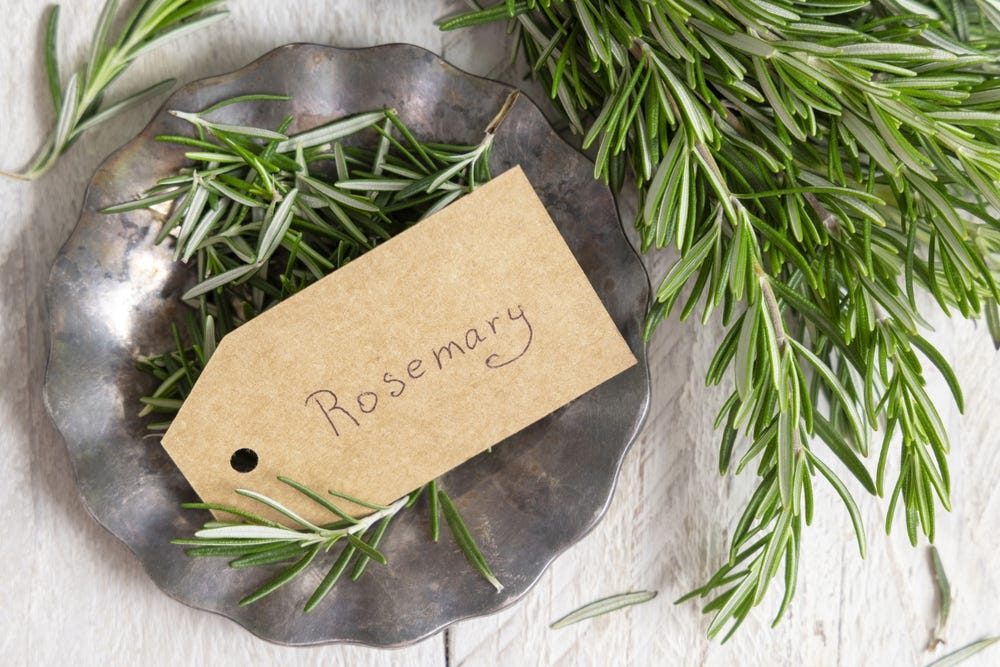
And if I want something simple and tangible, rosemary is a beautiful ally here. Traditionally associated with memory and clarity, it carries a gently stimulating quality that sharpens the mind without overstimulating it.
A cup of tea, a sprig crushed between my fingers, even the scent alone can feel like clearing a fogged window.
It isn’t magic, but it is biological. The nervous system responds differently to steady, non-demanding forms of life than it does to complex social environments. When I’m overwhelmed, being around people can actually increase my stress.
Conversation requires processing. Social interaction requires response. Even subtle cues take energy.
But a plant doesn’t evaluate me. Water doesn’t expect anything back. A forest doesn’t require performance.
The pause creates space, and contact with something living that asks nothing from you helps the nervous system soften. The input is slower. More predictable. Less variable. And that predictability signals safety in a way bright lights, screens, and social complexity often don’t.
That’s when the sharp edges ease. That’s when the noise lowers enough to hear what was already there.
If you’re in a season of overwhelm or uncertainty, you don’t have to force an answer. You can lower the volume first. Step outside. Touch something living. Breathe. Let your nervous system settle before you ask it to choose.
The tug doesn’t disappear when things get loud. It just gets harder to hear. And sometimes the most productive thing you can do is create enough quiet to listen again.
And when you do, something becomes clear.
You’re not lost. You’re in the process of learning how to follow what’s been calling you all along.
Dream Check In: 🎸 The Pivot Project — Week 1
Because the heart of TriGardening is about more than growing plants — it’s about using them as tools to grow ourselves, make steady progress on the things that matter, and feel more grounded while we do it. This check-in is where I share my goal updates every week — and invite you to do the same so we can grow together.
Following what calls to you doesn’t always feel profound. Sometimes it feels like sore fingertips and clumsy chord changes.
This week was mostly about building calluses. Which sounds minor until you remember that steel strings are not gentle teachers. The first few practice sessions were humbling. My fingers were tender. Chord transitions were slow. Everything felt slightly awkward.
I’m using JustinGuitar’s free Beginner Guitar Course as my structure. It’s incredibly well organized, and I appreciate having something linear to follow instead of bouncing randomly between YouTube videos.
I’m moving between Beginner 1 and Beginner 2 since some of the foundational material is familiar, but I don’t want to skip anything too quickly.
Right now, I’m working through the F Chord Journey and the pinky workout module. The F chord is… a rite of passage. My pinky has opinions. But there’s something satisfying about staying with a shape that doesn’t come naturally yet.
You can feel the neural pathways trying to connect in real time.
What surprised me most this week wasn’t musical. It was physical. There’s a quiet patience required while your body adapts. You can’t rush calluses. You can’t negotiate with fingertip skin. You just show up, press the strings, and let time do its thing.
It’s a small reminder that progress is often less dramatic than we imagine. Sometimes it’s just consistency. Sometimes it’s just staying long enough for your hands to catch up with your intention.
Fingers sore. Still playing.
Here’s a little video I made if you’re interested.
Until next week - stay curious, stay growing.
-KC 🌱